

10 Best Veg Protein Foods for Muscle Growth Recommended by Dt. Ritu Bhatia
Building muscle on a vegetarian diet is absolutely possible—but only when your meals are rich in the right quality protein.
Many people join the gym, start lifting weights, eat "healthy home food," and still struggle to gain lean muscle mass. The reason is simple: most traditional vegetarian meals are high in carbohydrates but often low in concentrated protein, which is the key nutrient required for muscle repair, recovery, and growth. Nutrition experts continue to stress that active adults need consistent protein distribution across meals to support muscle protein synthesis effectively.
As a practicing clinical nutritionist with over two decades of experience, Dt. Ritu Bhatia often sees vegetarian clients who believe they are eating enough, yet their daily protein intake falls far below what muscle development actually requires.
The good news is that with smart planning, the right food combinations, and proper meal timing, a vegetarian diet can support strength, stamina, and visible muscle growth naturally—without depending entirely on supplements.
In this guide, let us explore the best veg protein foods for muscle growth, how much protein your body needs, and how to create an effective Indian veg protein diet for gym performance.
Can Vegetarian Foods Really Help in Muscle Growth?
Yes, vegetarian foods can support muscle gain very effectively if they provide:
- sufficient total daily protein,
- a wide amino acid profile,
- adequate calories,
- proper workout recovery nutrition.
Muscles grow when resistance training creates micro-tears in muscle fibers, and dietary protein helps rebuild those fibers stronger. Without enough protein, workouts lead to fatigue instead of growth.
This is why many underweight vegetarians or gym beginners feel disappointed—they focus on exercise but ignore strategic protein intake.
According to Dt. Ritu Bhatia, one of the most common mistakes is assuming that eating roti, sabzi, rice, and occasional dal automatically creates a high-protein diet. In reality, muscle-building nutrition requires intentional inclusion of concentrated protein rich vegetarian foods in every major meal.
How Much Protein Do You Need for Muscle Growth?
For muscle gain, physically active adults generally need higher protein than sedentary individuals.
A practical target often ranges between:
1.2 to 1.8 grams of protein per kilogram of body weight daily, depending on:
- age,
- workout intensity,
- metabolism,
- current body composition,
- and muscle gain goals.
For example:
- a 60 kg person may need roughly 72–108 grams protein daily,
- a 70 kg gym-goer may require around 84–126 grams daily.
This protein should not come from one meal alone. It should be spread across breakfast, lunch, snacks, dinner, and post-workout meals for better utilization.
That is where choosing the right vegetarian muscle building foods becomes essential.
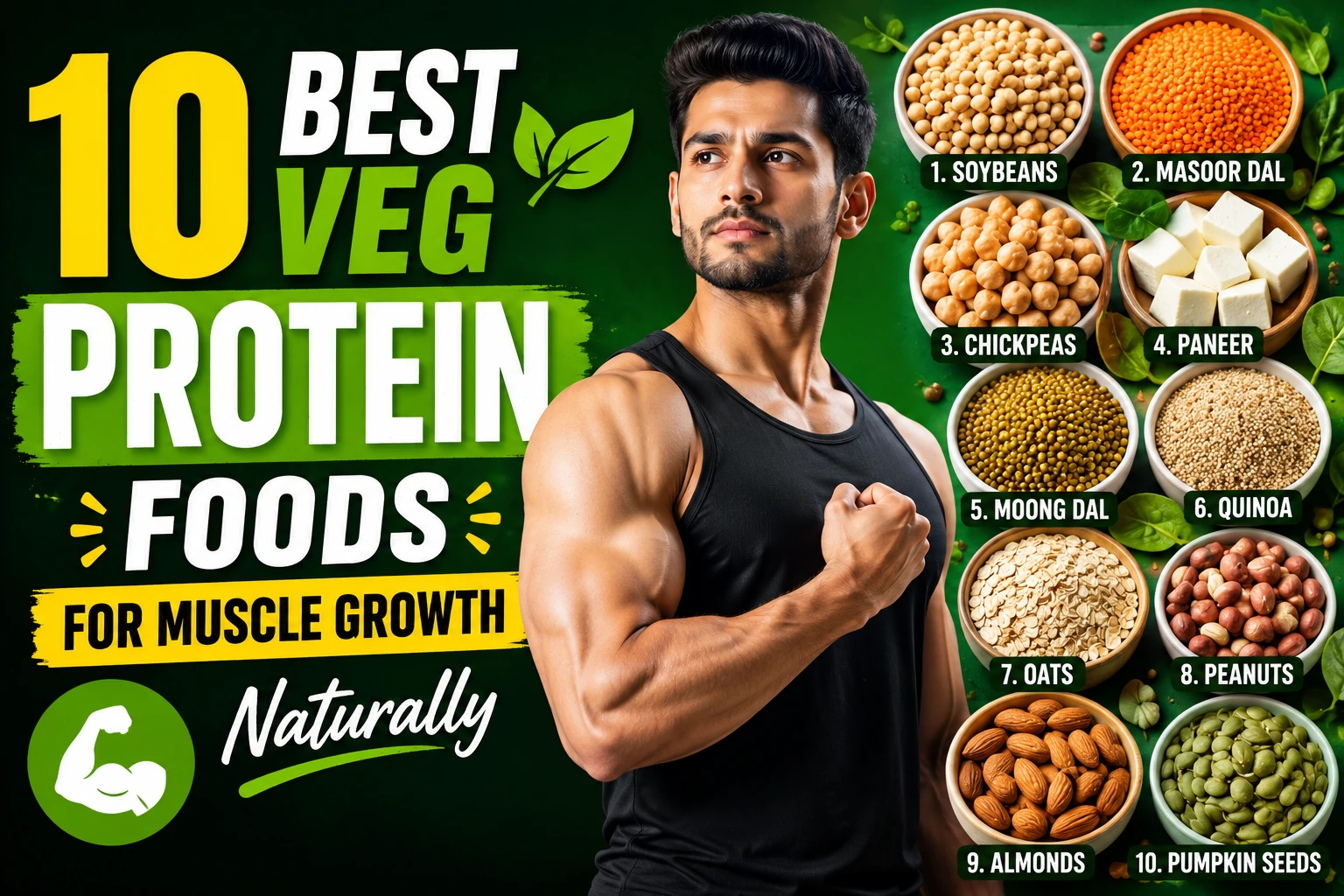
11 Best Veg Protein Foods for Muscle Growth
Soya chunks are among the highest natural vegetarian protein sources available in an Indian kitchen.
They contain concentrated soy protein and provide an excellent amino acid balance, making them one of the most efficient foods for muscle repair and lean mass gain. Soy continues to be widely recommended in vegetarian sports nutrition because of its strong protein density and affordability.
Protein: approximately 50g per 100g dry soya chunks
Best ways to include:
- soya bhurji
- soya pulao
- soya curry
- soya tikki
This is one of the best high protein vegetarian foods for muscle gain when used in moderate regular portions.
Paneer is a classic Indian vegetarian muscle food because it offers slow-digesting casein protein that supports prolonged muscle recovery.
It is especially beneficial in:
- breakfast,
- evening snacks,
- dinner,
- or bedtime meals.
Protein: approximately 18–20g per 100g
Paneer also provides calcium and satiety, making it suitable for both weight gain and lean muscle toning.
For those who want a lighter, low-fat soy option, tofu is an excellent addition.
It delivers complete protein with fewer calories than paneer and works well for people trying to gain lean muscle without excess fat.
Protein: approximately 15–17g per 100g
Tofu can be used in:
- salads,
- stir fry,
- wraps,
- sandwiches,
- grilled snacks.
Dal remains the backbone of an Indian veg protein diet for gym beginners.
Moong dal, masoor dal, urad dal, arhar dal, and mixed lentils provide:
- plant protein,
- iron,
- fiber,
- complex carbs.
Though dal alone is not as concentrated as soy or paneer, eating it daily helps improve total protein intake significantly.
Protein: approximately 9–18g per cup depending on variety
For better amino acid quality, combine dal with curd, paneer, or whole grains.
White chana and black chana are highly effective vegetarian protein foods because they combine:
- protein,
- slow energy carbohydrates,
- minerals,
- and fullness.
They are ideal for:
- pre-workout fuel,
- evening snacks,
- muscle gain salads.
Protein: approximately 14–15g per cooked cup
Roasted chana is also a practical office snack.
Rajma offers a strong combination of:
- muscle-supporting protein,
- iron,
- magnesium,
- complex carbohydrates.
This helps replenish glycogen after training while also supporting recovery.
Protein: approximately 13–15g per cooked cup
When paired with rice, the amino acid profile improves further, making it a smart vegetarian muscle meal.
Greek yogurt, hung curd, and thick homemade dahi are often overlooked but highly useful protein sources.
They are easy to digest and ideal for:
- post-workout bowls,
- smoothies,
- high protein snacks.
Protein: approximately 10–12g per serving
Additionally, probiotics help improve digestion, which is crucial when increasing total protein intake.
Moong sprouts and mixed sprouts are nutrient-dense foods that provide:
- protein,
- enzymes,
- vitamins,
- better digestibility.
They make a light but valuable addition to breakfast or snack meals.
Protein: approximately 8–12g per bowl
Sprouts can be mixed with paneer cubes or curd to improve the total protein value.
Milk remains one of the most practical and economical protein rich vegetarian foods.
It offers both whey and casein protein naturally, making it useful for:
- breakfast,
- bedtime recovery,
- shakes,
- smoothies.
Protein: approximately 8g per glass
Many vegetarian clients underestimate how helpful multiple dairy servings can be in meeting daily protein goals.
Peanuts, peanut butter, almonds, pumpkin seeds, sunflower seeds, and chia seeds are not complete meal proteins, but they work as excellent protein boosters.
They also add healthy calories, which helps underweight individuals trying to build size.
Use them in:
- smoothies,
- oats,
- curd bowls,
- snack mixes.
Quinoa provides a better amino acid profile than many standard grains and helps diversify the vegetarian protein base.
Though not the highest source alone, it supports complete meal quality when paired with legumes or tofu.
This makes it a smart choice in modern vegetarian muscle gain meal planning.
Which Vegetarian Food Has the Highest Protein for Muscle Gain?
Among natural whole foods, soya chunks, tofu, paneer, lentils, and chickpeas are considered some of the most effective veg protein foods for muscle growth because they provide:
- concentrated protein,
- muscle recovery support,
- practical Indian meal usability.
For clients who do not want protein powders, these foods can still help achieve high daily protein targets when used strategically.
Best Time to Eat Protein for Muscle Growth
Protein timing matters almost as much as protein quantity.
Dt. Ritu Bhatia recommends distributing protein across the day rather than consuming it only at lunch or dinner.
The ideal pattern includes:
- protein breakfast,
- protein snack,
- balanced lunch,
- post-workout recovery protein,
- protein-rich dinner.
This maintains amino acid availability for continuous muscle repair.
A common issue in Indian diets is a carb-heavy breakfast and low-protein daytime eating, which reduces the body's ability to sustain muscle synthesis.
Sample Indian Veg Protein Diet for Gym and Muscle Gain
This type of structured eating is much more effective than relying on random "healthy meals."
Common Mistakes Vegetarians Make While Trying to Build Muscle
1. Eating too little total protein
Many assume dal alone is enough.
2. Skipping breakfast protein
Morning meals are often carb dominant.
3. Depending only on supplements
Whole foods still matter for sustainable muscle growth.
4. Poor meal timing
Large gaps reduce recovery support.
5. Not customizing according to body type
A skinny gym beginner and an overweight strength trainee need different calorie and protein planning.
This is why a generic internet chart often fails to deliver real body composition changes.
Can You Build Muscle Without Whey Protein?
Yes. Whey protein is convenient, but it is not mandatory.
A well-designed vegetarian food plan using:
- soy,
- dairy,
- pulses,
- legumes,
- nuts,
- curd,
- tofu,
can help many individuals meet their natural protein needs effectively.
However, meal quantity, digestion, calorie intake, and workout consistency all need to be aligned.
Why Personalized Protein Planning Matters
No two individuals require the same vegetarian muscle gain plan.
Protein needs vary depending on:
- gender,
- body weight,
- age,
- digestive health,
- thyroid or PCOS issues,
- gym frequency,
- goal of lean muscle vs weight gain.
According to Dt. Ritu Bhatia, many people consume "healthy foods" but fail to see results because their meals are not scientifically balanced according to their body's actual requirement.
That is where personalized therapeutic nutrition makes the difference.